
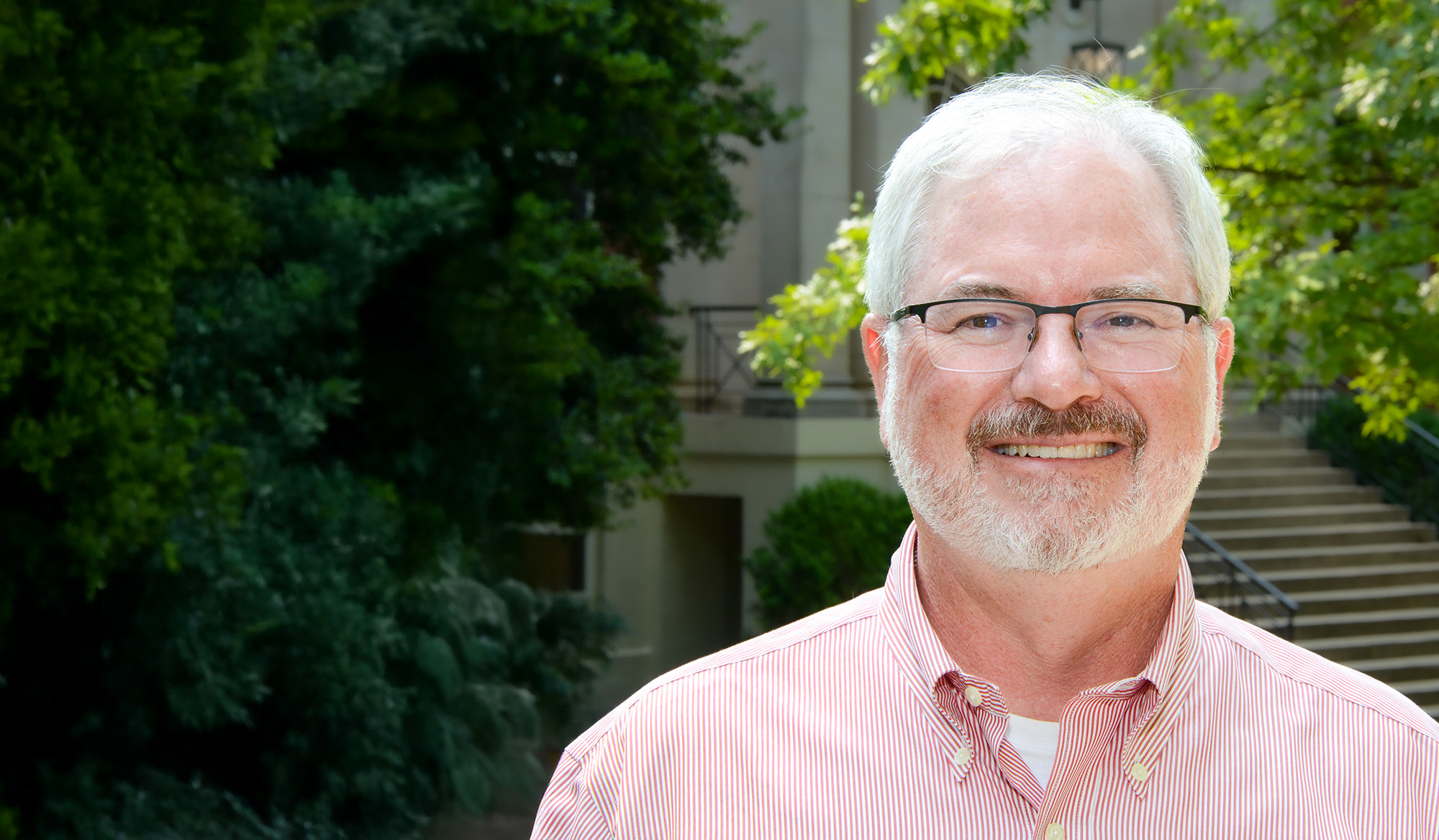
Most natural resources professionals can remember when they realized that they spend more time at a computer than they do in the field; that’s so common because working with data is how we plan the outdoor time, make sense of the outdoor time, and justify getting paid to do more and different stuff next time.
Senior Lecturer
I’ve been a “fish guy” since I was in elementary school, when my parents unwittingly accepted a donated 10-gallon aquarium from a friend who was moving. My father was an avid fly-angler, and I learned to love it, too, mostly because, in the words of John Gierach, “The purpose of fly fishing isn’t to catch fish, it’s to go places where fish are caught.” I’m drawn to data-driven aquatic conservation planning because it combines my loves for fish, fishy places, and technology.
I love my data-literacy position because I like helping students acquire the skills to do the cool stuff they came to Warnell to do. Most natural resources professionals can remember when they realized that they spend more time at a computer than they do in the field; that’s so common because working with data is how we plan the outdoor time, make sense of the outdoor time, and justify getting paid to do more and different stuff next time. The computer time makes the outdoor time worthwhile, but it’s not easy to think both ways; my job is to help folks see those connections and develop skills so they get back outside faster and be productive.
I’m much more interested in attitudes, skills, and habits than I am in any particular set of facts. Technology moves so fast and careers change frequently, so the best thing I can do is a teacher is guide students through a repeatable process that will empower them to keep learning on their own.
The most valuable thing a student can take from my classes is to approach new problems by thinking, “Surely I can figure this out. Folks do this, why not me?” I forget how to do stuff ALL THE TIME, but I know that, having learned it once, I can learn it again when the time comes.
I arrived in Athens in 1994 planning just to be here a few years before heading back to California. But plans change: I married a Georgia native and have now lived here longer than I’ve lived anywhere else. We live close to campus with our son and share a house with an orange cat, a Blue-Fronted Amazon (who I adopted in the mid-1980s) and an Australian Shepherd (who we adopted just about the time campus closed for COVID.) I’m not sure who’s the loudest, but it’s quite a contest.